 Korcula Boat Tours
Badija Island by Boat: The Complete Visitor Guide
A Badija island boat trip is the first excursion every Korčula visitor hears about: the largest island of the archipelago, a 15th-century Franciscan monastery on the quay, fallow deer in the pine shade, and swimming off pebble and rock in water that reads impossibly clear from the boat. It is also the archipelago island with the most ways to visit - four of the tours in our comparison stop here, and a range of independent taxi boats serve it in season. This guide covers everything the brochures compress: how the boat options compare on price and format, what the monastery and the deer actually offer, which beaches to pick, what facilities exist (and don't), and how to structure a half-day or full-day around it. When you know which format fits, the Korcula boat trip catalog holds the booking details.
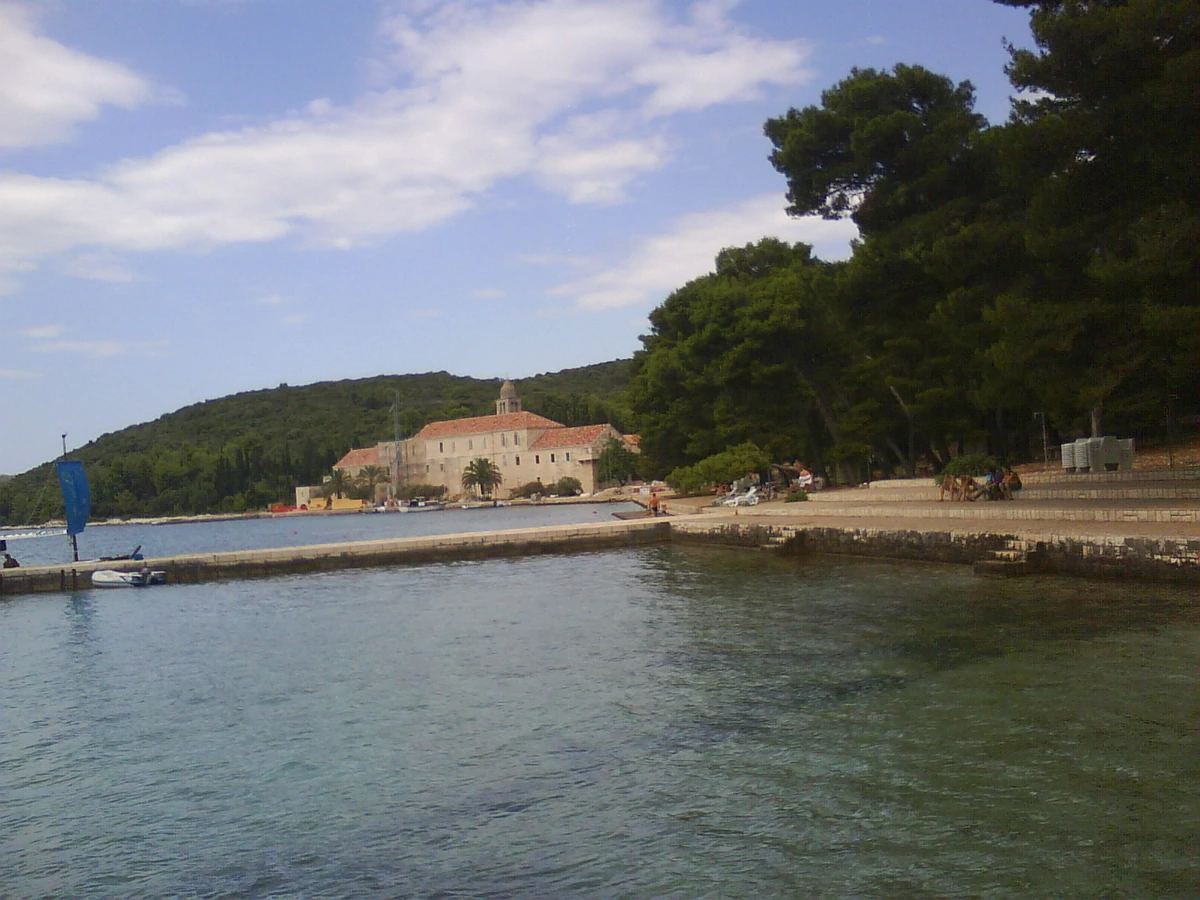
Badija's Franciscan monastery from the water - the first sight of the island. Photo: Anto, Wikimedia Commons (CC BY-SA 3.0)
Quick answer Every boat that stops at Badija with prices - and what the island itself actually offers
How do I get from Korcula to Badija island? Four ways, by budget: the riviera hop-off cruise at from $59 doubles as your day ticket with return boats; the three-island catamaran at $87 adds Vrnik and the Blue Lagoon; Sail Away at $88 visits on a 1973 wooden boat; and seasonal taxi boats run the crossing on demand. The island itself: a 15th-century Franciscan monastery, fallow deer on the paths, pebble-and-rock swimming, one seasonal beach bar - and no cars, no hotels, no road.
Key takeaways
- Cheapest visit: the hop-off cruise ticket - Badija transport and a guided loop in one $59 fare.
- Best combined day: the catamaran - Badija's walk, then two swim islands after.
- Bring cash and water shoes: the island's bar is seasonal and the entry is pebble, not sand.
Badija in One Paragraph
Badija sits fifteen to twenty minutes by boat from Korčula Town, across the channel that separates the Old Town from its archipelago. It is the biggest island in the group, and its story is the monastery's: Franciscans held it from the 15th century, built the church and cloister you still walk, and worked the island's fields and fisheries for five hundred years before the mid-century departures emptied it. Today it is uninhabited in any census sense - no cars, no hotels, no permanent residents - yet in season it pulses with day visitors who come for exactly three things: the monastery complex, the deer, and the water.
Everything else on the island - the paths, the swim platforms, the one beach bar - serves those three. A half-day covers it comfortably; a full day only if the swimming is the point.
How to Get There: Every Boat That Stops
Prices are from-prices read from the listings compared here, September 2026; the taxi-boat line is the seasonal harbour market.
How to Get There: Every Boat That Stops
| Boat | From-price | Time at Badija | What else you get |
|---|---|---|---|
| Riviera hop-off cruise | $59 | As long as you like - return boats on a posted schedule | Two-hour guided loop of the whole riviera + island day |
| Three-island catamaran | $87 | The longest single stop of its loop | Vrnik + Blue Lagoon swims, snorkel gear, 5.5 hours |
| Sail Away | $88 | One of four stops | 1973 wooden boat, snacks, drinks, smallest shared deck |
| Seasonal taxi boats | Negotiated per run | Your schedule | Point-to-point only - no tour, no commentary |
The Monastery and the Beaches
The Franciscan monastery dates from the 15th century, and its complex sits where the boats land: church, cloister, and the stone courtyards that five centuries of island life grew around. It is a working heritage site rather than a museum experience - the church interior asks modest dress, the cloister photographs best mid-morning when the light comes down into it, and a small donation has historically been the etiquette for the museum corner. Around the monastery, the island's paths run out to swimming: the main pebble beach on the quay side serves the bar-and-ladder crowd; the rocky platforms along the northeast shore hold the sun-worshippers; and the walk-out coves - fifteen minutes on foot - return you to near-private swimming.
Entry everywhere is pebble or rock: water shoes are the single best purchase you will make for this island. And the practical geometry most guides skip: the boat landing, monastery, beach and bar all sit within five minutes of each other, which is why even the shortest tour stop here works - you can see the essentials in forty minutes or lose a whole afternoon.
The Deer and the Pine Walks
Badija's fallow deer are the island's second fame, and the first thing to know is that they are real, wild-in-the-way-semi-feral-means, and thoroughly socialised to people. They graze the clearings between the monastery and the paths, they walk out to meet arriving boats with the confidence of animals that have never had a bad day with a tourist, and they will eat out of your hand - which is precisely what you should not offer. Feeding them is bad for the herd, accelerates the aggressive begging behaviour that the island's info boards ask you not to create, and turns a magical encounter into a queue.
The walks: the island is small enough that an hour covers its main paths, pine-shaded for most of the day, with the swimming coves as natural destinations. Families should know the deer are the reason children remember this island over every other stop in the archipelago - the kids' guide ranks Badija stops as the archipelago's best child-content. Bring nothing but respect; photograph everything.
Costs and Facilities on the Island
The island itself costs nothing to walk: no entry fee, no monastery ticket beyond the donation etiquette, no parking problem because there are no cars. What costs money: the boat (see the table above), whatever the seasonal beach bar sells (drinks, simple food, ice cream - cash-first in high summer, at beach-bar prices), and the sunbed rows on the main beach in peak season, rented at the bar. What does not exist: hotels, shops beyond the bar kiosk, drinking-water fountains of proven reliability, or any shelter worth the name when the maestral turns the afternoon cool.
Bring water, bring the towel, bring small euro notes - Croatia has run on the euro since 2023, so no currency arithmetic - and bring the expectation of simple: Badija's charm is that almost nothing has been built on it since the Franciscans. The facilities summary is short by design: a bar, a beach, paths, deer, monastery, water. Everything else you carry in and carry out.
Half Day or Full Day
The honest answer: most visitors are done with Badija in two to three hours - monastery, deer, one long swim, a drink at the bar - which is why the tour formats that give it a long single stop (the catamaran) or a hop-off stay (the riviera cruise) fit it so well. A full day on Badija is for a specific traveller: the one who treats it as a swimming base, rotating between the main beach, the platforms and the walk-out coves, with the deer and monastery as the morning's cultural hour. That traveller should take the hop-off format with the first morning boat and the last afternoon return, and pack accordingly - the bar covers lunch, barely.
Families with children run on a different clock: the deer buy the first hour, the beach buys the next two, and the day fills itself - the kids' verdict in our family guide is that Badija is the archipelago's best single stop for under-tens. Photographers and swimmers can split the difference: morning light for the monastery, midday water for the coves, the 16:00-ish return boat home. From-prices for every format sit in the Korcula boat trip price comparison.
A Badija Day, Hour by Hour
The shape of a good Badija visit, whether you arrive on a tour stop or a hop-off day. 09:30 - first boats: the island at its quietest; the deer graze the clearings near the monastery before the day's foot traffic, and the water off the pebble spit is at its flattest. 10:00-11:30 - monastery and paths: walk the complex while the light is still angled, cloister first, church second (modest dress for the interior), then the pine paths east toward the quieter platforms. 11:30-13:30 - the long swim: back to the main beach or the rocks, whichever the wind favours; the water shoes earn their keep on both. 13:30 - lunch at the bar: simple, seasonal, cash-first; the terrace fills with tour groups by 13:00, so earlier is calmer. Afternoon - the second swim or the walk-out coves: fifteen minutes on foot takes the crowds' opposite direction, and the coves reward it. 16:00-ish - the return: tour stops run 40-60 minutes and the hop-off boats post their afternoon schedule at departure - photograph it when you board. The full-day version of this plan is simply the afternoon stretched: the island does not grow, but the swimming does.
The Monastery's Story, Briefly
The bare facts make the walk better. Franciscans held Badija from the 15th century - the monastery you see dates from that era, built over earlier structures - and for roughly five hundred years it ran the island: fields, fisheries, the quarry-era trade that passed between the islands, and a theological school that drew students from across Dalmatia. The 20th century emptied it twice - war use, then the post-war nationalisation - and the buildings spent decades in institutional hands before the diocese's return and the slow restoration that continues.
What a visitor reads in the stones: the church and cloister at the core, the long farmhouse wings the brothers worked from, and the waterfront terraces where the island's life concentrated. The deer arrived in the mid-20th century as introduced animals and naturalised into the island's identity - which is why the info boards protect them like heritage rather than wildlife. Ten minutes of attention to any of this turns the monastery stop from a photo background into the reason the island matters; the standing stones and inscriptions around the complex reward exactly that much attention.
Badija With Children: The Family Playbook
Badija is the archipelago's easiest island with children, and the playbook is short. The deer first: arrive before mid-morning and the deer are in the clearings; let children approach slowly rather than chase, and the encounters run long and magical - the feeding ban is the one rule to set before landing. The walk is safe: the paths between monastery and beach are car-free and gentle, and children old enough to walk get the rare freedom of an island that cannot lose them to traffic.
The beach is managed: the main pebble spit shelves gently, the bar end holds the facilities, and the rocky platforms reward the older kids. The timing rule: the island's content fits a child's attention perfectly - monastery-hour, deer-hour, swim-hours - and the tour formats that give it a long stop (the catamaran) or a hop-off day (the riviera cruise) both run it well. What to bring: water shoes for the pebble, snacks beyond the bar's ice cream, and the standard sun kit from the packing list.
The review pattern confirms what parents report anecdotally: for under-tens, Badija is the day they retell first.
Combined Days: Badija Plus
Badija pairs naturally with the rest of the archipelago, and the pairings are the difference between a good stop and a full day. Badija plus Vrnik is the classic tour combination - the monastery walk and the quarry rocks in one morning, two personalities of island in twenty minutes of water between them; the catamaran and Sail Away both run it. Badija plus the Blue Lagoon adds the colour to the culture, the comparison's most family-pleasing afternoon; the same two products close their loops at Stupe.
Badija plus Lumbarda is the hop-off cruise's shape - monastery morning, wine-village afternoon, return boats collecting you at day's end. Badija alone is a half-day honestly: see the day-plan above for the version that fills it. What does not pair well: Badija and the open-water snorkel products in one day - different boats, different coasts, and a child's stamina has limits.
The planning rule: one archipelago hop per day, chosen by the group's swimming confidence, with Badija as the anchor stop it earns by being the archipelago's one island with a monument, a bar and deer.
The Three Photographs Worth Walking For
Badija photographs well from exactly three stations, and knowing them saves an hour of wandering. First, the quay angle: the monastery facade across the small harbour, best in the first hour after arrival while the tour boats are still arriving in the background - the shot that says 'island monastery' in one frame. Second, the pine-line path: ten minutes east, the path looks back at the complex over the clearings where the deer graze - the deer-in-foreground, monastery-behind shot is the island's signature and rewards patience more than gear; a phone at eye level, low, with a deer at ten metres, is the photograph most visitors are trying to take.
Third, the low rocks past the main beach: the southeast shore's smooth platforms look back across the channel at Korčula Town's walls and towers - the reverse-angle postcard, best in late afternoon when the Old Town side catches the light. Times: morning for the first two, afternoon for the third. And the etiquette that keeps the island photographable: the deer are wild animals to be waited for, never chased - the best Badija photographs on any platform were taken by the traveller who stood still longest.
The Practical Margins: Toilets, Shade, Wind and Leaving
The small logistics that reviews mention and brochures skip. Facilities: the bar's toilets are the island's public option in season - modest, serviced, closed with the bar in October; there is nothing else, so plan the swim-bag around it. Shade: the monastery cloister and the pine paths hold most of the island's cover; the beach relies on umbrellas and the trees at its back edge - midday in July is a shade-scarce hour and the walk-to-coves crowd have the right instinct.
The wind habit: Badija's south side stays swimmable on the summer maestral because the island itself is the shelter - the practical effect is that Badija days rarely cancel outright, which makes the island the reliable anchor of any archipelago plan. Water: bring it; the bar sells bottles at beach prices and the taps near the monastery are not for drinking. And leaving: the tour stops announce departure with a horn and the hop-off boats keep the posted schedule to the minute - the island has no restaurant worth missing a boat for, and the last swim is always better than the hurry.
Ten minutes of margin, photographed schedule, dry bag packed - the Badija day closes the way it ran.
Badija Questions
Is Badija island worth visiting?
Yes, for three specific things: the 15th-century monastery complex, the deer, and clear-water swimming within twenty minutes of Korčula Town. It is not a dramatic landscape island - no cliffs, no caves - it is a gentle one, and travellers who expect drama rate it lower than travellers who expect exactly what it is. As a half-day from the Old Town it has no real competitor in the archipelago.
Are there really deer on Badija island?
Yes - fallow deer, present for decades and fully accustomed to visitors. They graze the clearings near the monastery and walk out to meet boats. The etiquette the island asks: look, photograph, do not feed - the feeding is what turns them from a highlight into a nuisance, and the info boards say so plainly.
Can you stay overnight on Badija?
No - there are no hotels, no legal camping and no night-time boat service. The island is a day-trip product by its own design; the last scheduled returns run late afternoon, and after that the deer have the island to themselves. Accommodation searches for Badija actually mean Korčula Town or Lumbarda on the mainland shore.
Which is better for Badija - a tour or a taxi boat?
A tour for most visitors: the hop-off cruise at from $59 includes the riviera loop plus your island day, and the tours fold Badija into a fuller archipelago day. A taxi boat suits exactly one case: a group that wants the crossing on its own schedule and nothing else - and in peak season the price of that flexibility approaches the tour tickets anyway.
How long is the boat ride from Korcula Town to Badija?
Fifteen to twenty minutes on the tour boats - close enough that the crossing is part of the pleasure rather than a commute. The hop-off cruise reaches it inside its first hour; a taxi boat makes the crossing on demand in season. Seasickness is rarely an issue on this run: the channel between Korcula Town and Badija is sheltered.
Can you walk around all of Badija island?
Most of it: the paths cover the monastery side and the eastern coves comfortably within an hour, and the interior pine walks are marked well enough to wander. The island's edges beyond the paths are rocky and best left to the water's view. Sensible footwear, water in summer, and the standard Croatian etiquette about not straying through private or restoration areas cover the rest.